
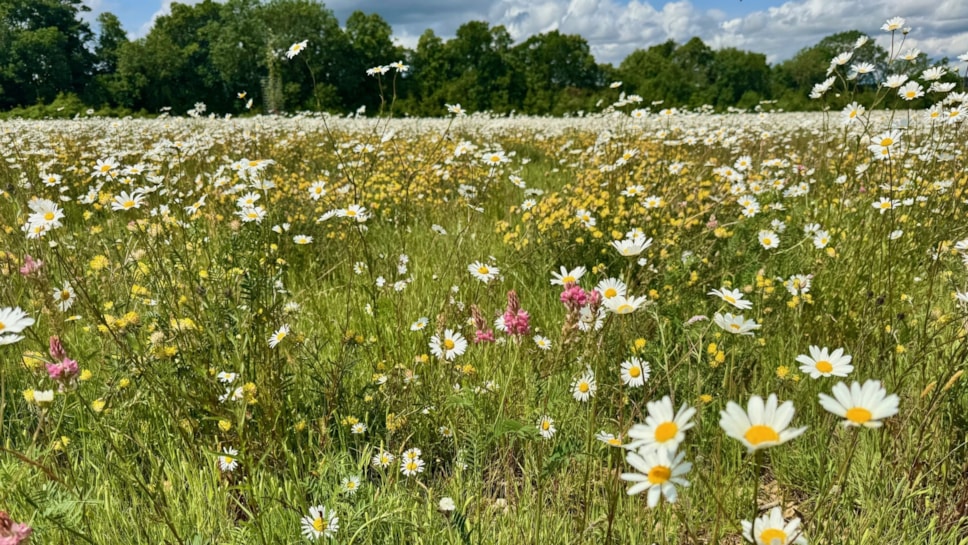
New habitat bank at Radford Farm to help nature recover in West Oxfordshire
A new habitat bank at Radford Farm near Chipping Norton is helping to restore nature in West Oxfordshire while supporting sustainable farming and tackling climate change.
A habitat bank is an area of land that is used to create or restore habitats for wildlife. Restoring these habitats improves biodiversity, which is the variety of plants and animals living in an area. Developers help fund this work to balance the impact of new building projects and improve nature locally.
Cllr Andrew Prosser, Executive Member for Climate Action and Nature Recovery said: “West Oxfordshire has long been at the forefront of supporting nature recovery, and this new habitat bank is another positive step forward for the district. Projects like Radford Farm show how farming, biodiversity and climate action can work together to benefit local communities. By restoring habitats locally, we can help wildlife recover, improve air, and water quality, store carbon and create a healthier natural environment for future generations.”
The Council’s Nature Recovery Plan sets out ways to protect and restore habitats across the district. This includes improving biodiversity on Council-owned land and supporting communities, farmers, and landowners to take part in nature recovery projects.
As part of the Nature Recovery Plan, the Council introduced policies to support Biodiversity Net Gain (BNG). BNG is a planning rule that ensures new developments aim to leave nature in a better state than before. This can include creating habitats such as wildflower meadows, wetlands, and woodland.
BNG policies can also help farmers and landowners earn money by creating and managing habitats that support wildlife and improve the long-term sustainability of their land.
Sam Parsons, landowner at Radford Farm, said: “By taking the right areas out of crop production, we are creating something beautiful where land was losing nutrients. Income from BNG land covers the cost of the lost crops, and the advice and support I’ve received shows how BNG can support both nature recovery and helping farms stay sustainable.”
Radford Farm habitat bank will help ensure that biodiversity lost through development in the district is replaced locally rather than elsewhere in the country. Work already carried out includes sowing native wildflower seeds and planting trees to provide more shade. Habitat restoration can also help store carbon, improve water and air quality, reduce flood risk, and support the recovery of local wildlife.
Radford Farm follows the district’s first habitat bank, Pudlicote Farm, created in 2025, where farmland has been turned into wildflower-rich grassland. Early surveys have shown positive results, with most areas now containing eight or nine of the ten planned plant species in every square metre despite difficult weather during the first year. Together, these projects are helping to restore nature and increase biodiversity across West Oxfordshire.
More information about the Radford Farm habitat bank is available on the Trust for Oxfordshire’s Environment website.
Contact Information
West Oxfordshire District Council Communications Team
Notes to editors
The habitat bank has been registered by the Trust for Oxfordshire’s Environment (TOE), a long-standing partner of the Council in delivering Biodiversity Net Gain (BNG) projects across the district.
The habitat bank will also sign up to Oxfordshire NatureMark, an optional scheme to share information about nature recovery projects online so everyone can see what work is being done.