
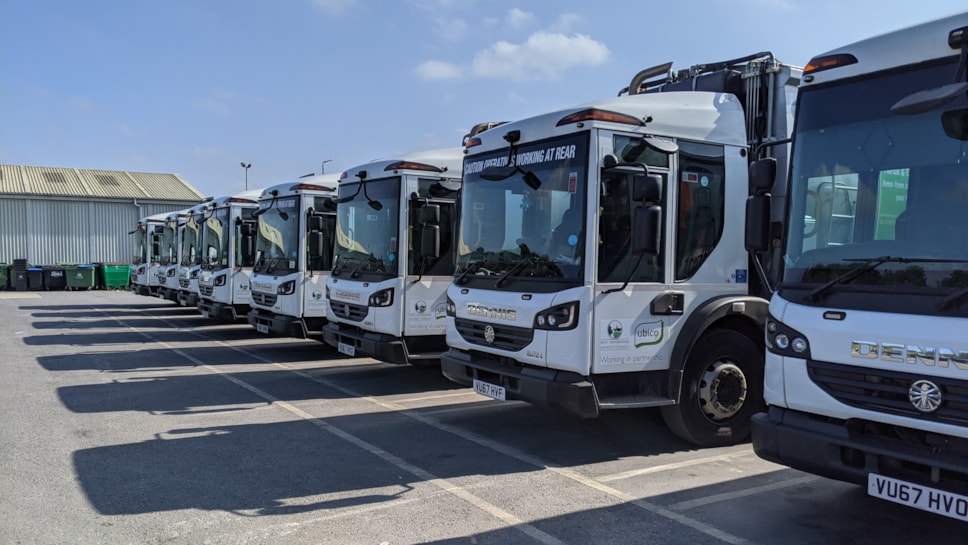
Council invests in waste vehicle fleet to protect services and cut carbon emissions
West Oxfordshire District Council has approved a £3.5 million investment in its waste and environmental services fleet to replace ageing vehicles, improve reliability and reduce carbon emissions.
The investment will see older vehicles replaced as part of the Council's ongoing fleet replacement programme. Due to the rigours and demands of the service, it is industry standard to replace waste vehicles before they start to fail, and breakdowns and repairs have a detrimental impact on the service. This decision will replace 16 diesel waste collection vehicles with 14 new vehicles that can run on Hydrotreated Vegetable Oil (HVO) or diesel, and 2 that will be electric.
The Council will have the option of using certified Hydrotreated Vegetable Oil (HVO) as a lower-carbon alternative to diesel while continuing its transition towards a fully zero-emission fleet.
Councillor Alistair Wray, Executive Member for Environment, said: "We are proud of our record of 99.95% successful collections across the district. We want to protect the reliable waste collections residents receive while continuing to reduce the carbon emissions from our fleet.
"We already use electric vehicles successfully and they remain our first choice wherever they are suitable and affordable. However, the technology is not yet suitable for some of the larger vehicles and collection rounds we rely on every day.
"Using certified HVO gives us a practical way to significantly reduce emissions by up to 83% compared to diesel vehicles, while we continue to test new technology and move towards a zero-emission fleet in the future.”
The Council has been increasing the number of electric vehicles used across its waste, street cleansing, and grounds maintenance services in recent years. In 2024 and 2025 it approved and introduced additional battery-powered vans, alongside investment in charging infrastructure. Four new electric food waste collection vehicles are due for delivery at the end of the year and two of the 16 vehicles due for replacement will be electric.
It has also trialled larger electric waste vehicles with its delivery partner Ubico. While the trials showed the potential of the technology, they also identified challenges around reliability, range and charging in a large rural area like West Oxfordshire.
The need to replace vehicles has become increasingly urgent. Sixteen vehicles will reach or have passed their expected lifespan in 2026, leading to more breakdowns, higher repair costs, and greater reliance on hired vehicles.
HVO is a renewable alternative to diesel that can be used in all existing diesel-powered vehicles without changes to engines or new fuelling infrastructure. The certified HVO assessed for the Council is made largely from waste materials and has independently assessed direct greenhouse gas savings of up to 83% compared with fossil diesel.
The Council will only buy HVO that meets recognised sustainability standards. Suppliers will need to provide evidence about where the fuel comes from, its greenhouse gas emissions and independent certification. These checks will help address some of the concerns around the sustainability of HVO and its supply chain.
Contact Information
West Oxfordshire District Council Communications Team
Notes to editors
The full report is available online: https://meetings.westoxon.gov.uk/documents/s18405/Fleet%20Decarbonisation%20and%20Transition%20to%20Zero%20Emission%20vehicles%2001-10-26.pdf
The council has published its fleet decarbonisation vehicle procurement strategy, which is available to read here: https://meetings.westoxon.gov.uk/documents/s18408/Annexe%20C%20Fleet%20Decarbonisation%20and%20Vehicle%20Procurement%20Strategy%2001-10-26.pdf